
Top Films Across 3589 Topics, Ranked A–Z for 2026
Top Films Across 3589 Topics, Ranked A–Z for 2026
By Michael Harrington
All Movie Themes A–Z: 3589 Topics (2026)
If you have ever scrolled a streaming service on a Friday night in Los Angeles or Chicago, you know the feeling: forty minutes of browsing, a dozen thumbnails, and no clear idea of what you actually want to watch. Most people in New York, Houston and every other American city start with a mood or a subject rather than a genre label. You might want a film about a heist, a survival story set in the Alaskan wilderness, or something about time travel that does not require a physics degree. That is where a theme-based catalog earns its keep, and it is why the approach behind movies by theme has become a practical way to decide what to watch rather than a niche hobby. Filmove organizes 3589 topics from A to Z, so the search begins with the subject you care about instead of a vague category.

The difference between a theme and a genre matters more than it first appears. A genre such as thriller or drama is a broad container, and it tells you how a film is likely to feel. A theme tells you what the film is about. A war story can be a thriller, a drama, a comedy or an animated feature, and a revenge plot can sit inside a Western, a Korean crime film or a quiet character study. When you move from genre to theme, you stop comparing films by their marketing category and start comparing them by the question they are asking. That shift is the reason the A–Z index is useful: it cuts across eras, budgets and production countries, so a 1970s classic and a recent streaming original can appear side by side under the same subject heading.
This article walks through how to use a theme index in a disciplined way. The sections below cover how to narrow thousands of topics to a shortlist, how to judge whether a film treats its theme centrally or only as decoration, how to check where a title is actually available across US markets, and which mistakes waste the most evening time. The goal is a repeatable routine that you can run in five minutes whenever you sit down with the remote or the phone.
Choosing a Movie Theme: Criteria and Decision Points
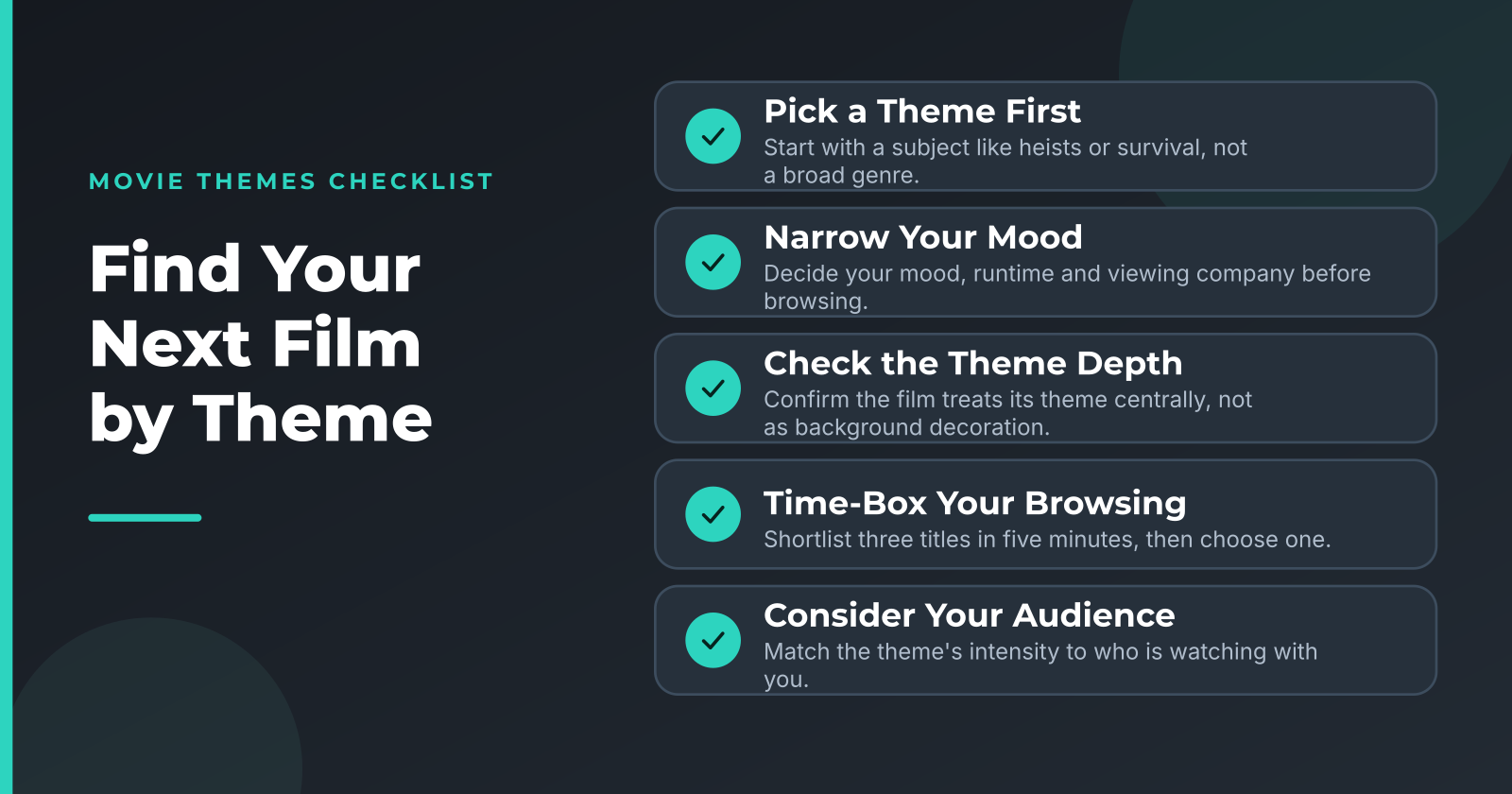
Thousands of topics can paralyze a viewer just as thoroughly as thousands of titles, so the first job is narrowing. Start with three filters that you can answer quickly: the mood you are in, the runtime you can afford, and the context in which you are watching. A Tuesday night in Houston after a long shift calls for a different theme than a Saturday afternoon when the whole household is home. A tense war film might be perfect for a solo weekend viewing and a poor choice for a family with younger children. Writing those three answers on a note before you browse keeps the list short and prevents you from reopening the same five titles every time.
The second decision point is checking whether a film genuinely engages its theme. Many titles carry a subject in their marketing but use it as wallpaper. A heist movie where the robbery is a single scene at the end is a different experience from one where the planning, betrayal and aftermath drive the plot. Look at the theme page’s description of the topic, then read the synopsis and ask whether the central conflict depends on that subject. If the answer is yes, the film will reward you. If the theme only shows up in the trailer, you are better off skipping it for something more committed.
The third point is audience fit, which covers rating, era and who you are watching with. A time-travel film from the 1980s may feel charming and slow to a viewer used to modern pacing, while a recent release may contain language or violence that does not suit a family evening. Check the content rating, the release year and the typical audience reaction before committing. For couples and groups, a theme that generates discussion, such as a moral dilemma inside a revenge story, often works better than pure spectacle, because it gives everyone something to talk about after the credits roll.
-
Mood: decide whether you want tension, comfort, wonder or catharsis tonight.
-
Runtime: match the film length to the actual viewing window, not the one you hope to have.
-
Context: solo, couple, family or group, and whether the room is quiet or noisy.
-
Centrality: confirm the theme drives the plot rather than decorating the trailer.
-
Fit: check rating, release era and tone against your audience.
Finding the Best Movies for a Theme
Once you have a theme, the next task is separating a strong film from filler. Theme pages for subjects like war, zombies, space and revenge tend to fill up with hundreds of entries, and not all of them deserve your evening. A useful test is to look for films that appear repeatedly in discussions of that subject across different eras, because durable reputations usually reflect real craft. A zombie film that influenced later directors and still gets cited decades later tells you more than a recent title with a flashy poster and little else. Comparing two or three films within the same theme reveals far more about quality than reading a single description in isolation.
Tone and pacing are the variables that most often decide whether a film works for you. Two space films can share a premise and feel completely different: one a slow, contemplative study of isolation, the other a fast action picture with constant set pieces. Neither is better in the abstract, but one will suit your mood. Watch the first ten minutes in your head by reading the synopsis closely and noting whether it promises a slow build or an immediate hook. Pay attention to the ending style as well. Some revenge films close with catharsis, others with ambiguity or cost, and knowing which you prefer prevents disappointment.
Cross-checking is the final step. Critic consensus gives you a broad sense of whether a film landed with professionals, while viewer ratings show how audiences responded to the experience itself. The two often diverge, and that divergence is informative. A film that critics praised for ambition but audiences found slow may still be worth it if you value craft, while a crowd favorite that critics dismissed may be a reliable pick for a relaxed night. Use both signals as inputs rather than verdicts, and remember that a first-time viewer of a theme may enjoy an accessible entry more than a demanding classic, so start where the difficulty matches your appetite.
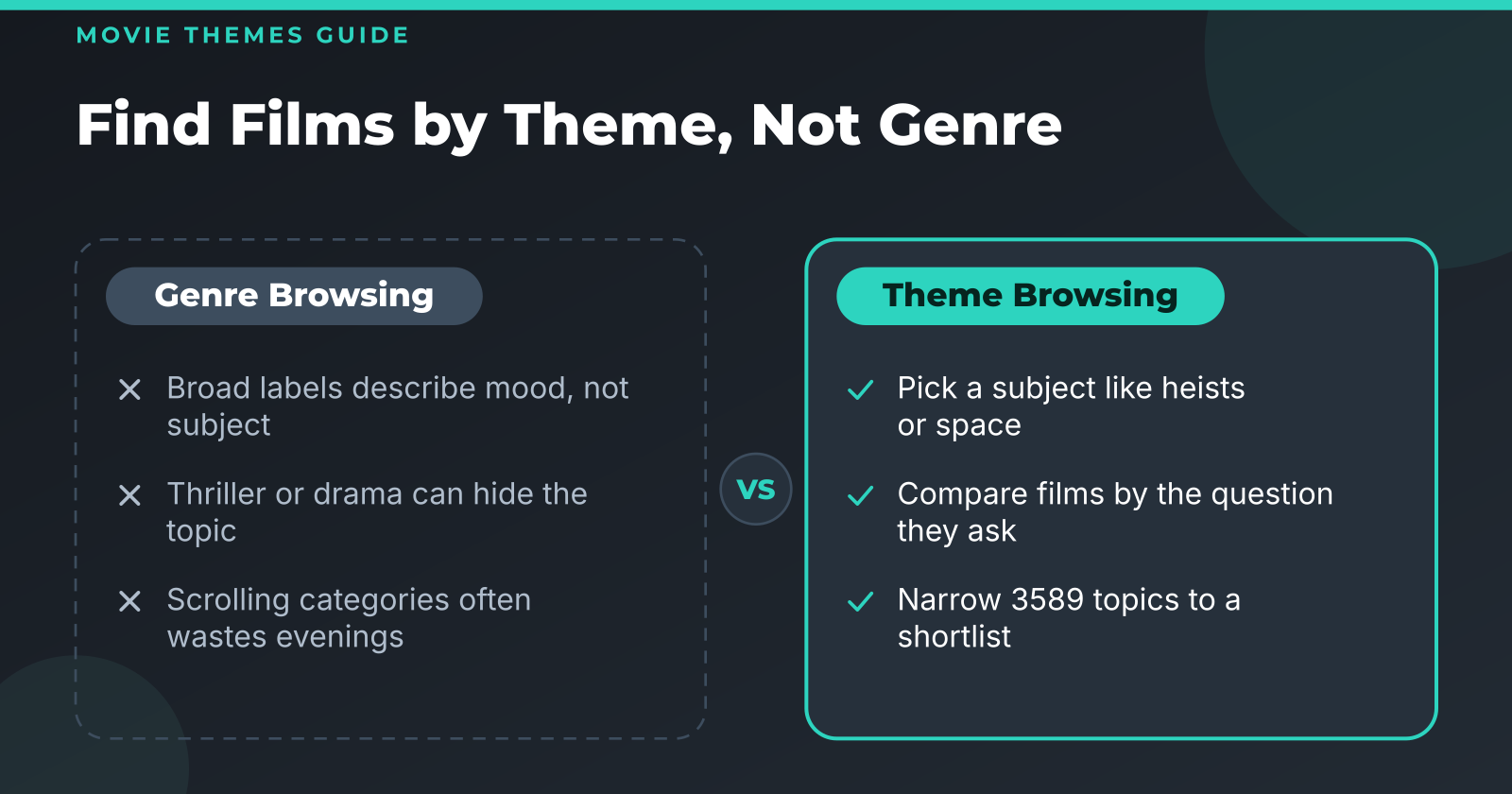
A theme tells you what a film is about; the genre tells you how it will feel. Decide on the subject first, then choose the feeling.
Where and How to Watch: Costs and Access in the US
Finding the right film is only half the problem, because the question of where to watch it can quietly consume the evening. In the US, the three main routes are subscription streaming, rental or purchase, and free ad-supported platforms. A monthly subscription in the range most Americans pay often makes sense for someone who watches several films a week, while a single rental, typically a few dollars per title, is the cheaper choice if you only want one specific film about a single subject. Buying outright suits a title you plan to rewatch, such as a favorite heist film or a space epic you want to show friends. Working out which route fits your habits takes a minute and saves more than most people expect over a year.
Free options deserve more attention than they usually get. Many ad-supported services carry substantial libraries, and public library systems in cities such as Chicago and New York often provide free access to streaming catalogs with a library card. Availability shifts with the seasons, too. Holiday periods and the start of a new year bring rotating catalog changes, and a title that disappears in one month may return later. If a film you want is missing, check whether a library partner or free service carries it before paying for a rental. If you want a ready-made starting point, you can browse films organized by movies by theme on Filmove, which lets you compare titles that share a subject before you commit to a single evening’s pick.
Regional licensing is the detail that frustrates viewers most, because a film available in Los Angeles may not be streamable in Chicago or Houston. Licensing agreements are often structured by territory, and while most US catalogs are national, some titles are restricted by region or by the platform’s local deals. Before you plan an evening around a particular film, confirm that it is available on the service you use in your own city. A theme index helps here by surfacing alternatives on the same subject, so if one title is unavailable, a comparable entry on the same topic is usually one click away.
Common Mistakes and How to Avoid Them
The most frequent error is choosing by title alone. A name that sounds like a heist or a revenge story can belong to a comedy with almost no theme at all, and a vague title often hides an entirely different subject. Reading the theme description and the synopsis before committing takes less than a minute and prevents the common experience of finishing a film and feeling it never delivered what you came for. Treat the title as the starting point of your check, not the conclusion.
Ignoring runtime and content rating causes trouble in mixed groups. A two-and-a-half-hour war epic may be an excellent weekend choice and a poor pick for a school night, and a film rated for mature audiences can derail a family evening even when its theme seems harmless. Set the runtime and rating limits before you browse, so the decision is made against real constraints rather than hope.
Relying on a single source for availability or ratings is another trap. One platform may show a film as unavailable while a different service in the same city carries it, or a single rating may reflect an unusual sample of reviewers. Cross-referencing two signals catches these gaps. Finally, overloading a watchlist backfires: a list of forty themes and two hundred films produces decision fatigue, and nothing gets finished. Keep the list to three or four candidates per session and finish what you start.
What Filmove Helps You Do
Filmove is built around the question viewers actually ask: what should I watch about this subject? The site covers 3589 topics from A to Z, so you can search by a theme such as time travel, survival or first love rather than by a broad category, and each entry gathers films and TV shows where the subject plays a real part. Filters for genre, year and type let you narrow the list to the constraints you set earlier, and each movie page links to similar titles so you can move from one favorite to the next without starting over. The platform also offers curated collections, which are useful when you want a structured route rather than a random browse.
The practical value shows up when you compare films within a single theme. Instead of opening a dozen tabs, you can scan a theme’s entries side by side, check their tone and era, and shortlist the right one for tonight or for a planned series. For someone building a weekend double feature on heists, or working through revenge films across decades, that comparison saves real time. The index also helps people who have a favorite film and want more of the same subject, because the similar-titles view points toward related themes rather than only related genres.
It is worth being clear about scope. Filmove is a discovery tool for finding what to watch, not a replacement for the streaming platform, the rental service or a ratings aggregator. Once you have a title in mind, you still need to confirm availability in your city and check the details that matter to your household. Used that way, a theme index works as the first step in a short routine rather than the whole process.
Conclusion: Practical Next Steps
Choosing a film gets easier when you follow a short routine. Start by picking a theme that matches your mood and the subject you are curious about, whether that is a war drama, a zombie thriller or a space story. Apply the criteria: confirm the film treats the theme centrally, check its tone, runtime and rating against your viewing context, and compare two or three candidates before committing. Finally, verify access in your own city, because licensing can differ from Los Angeles to Houston, and check whether a free or library option carries the title before paying for a rental.
For your next viewing session, keep the routine tight. Write down the mood, the available time and who is watching. Open the theme index, pick one subject, and shortlist three films from that theme. Read each synopsis, check the rating and confirm availability. Choose one, and commit to finishing it. A theme-based approach turns an aimless evening into a deliberate one, and over time it builds a clearer sense of which subjects and tones you return to again and again.